


Lowell, Massachusetts, has come a long way from its roots as a bustling mill town. Today, it’s one of Greater Boston’s most dynamic and affordable real estate destinations.
Whether you’re a first-time buyer hunting for your starter home or an investor seeking rental income, buying a house in Lowell, MA, in 2026 requires a clear strategy, local insight, and a sense of timing.
In this guide, local expert Jeremy Smith shares his perspective on navigating the Lowell, MA housing market, uncovering the best neighborhoods, and understanding the financial and logistical considerations that come with homeownership here.
The 2026 Lowell, MA Housing Market Snapshot
Market Resilience
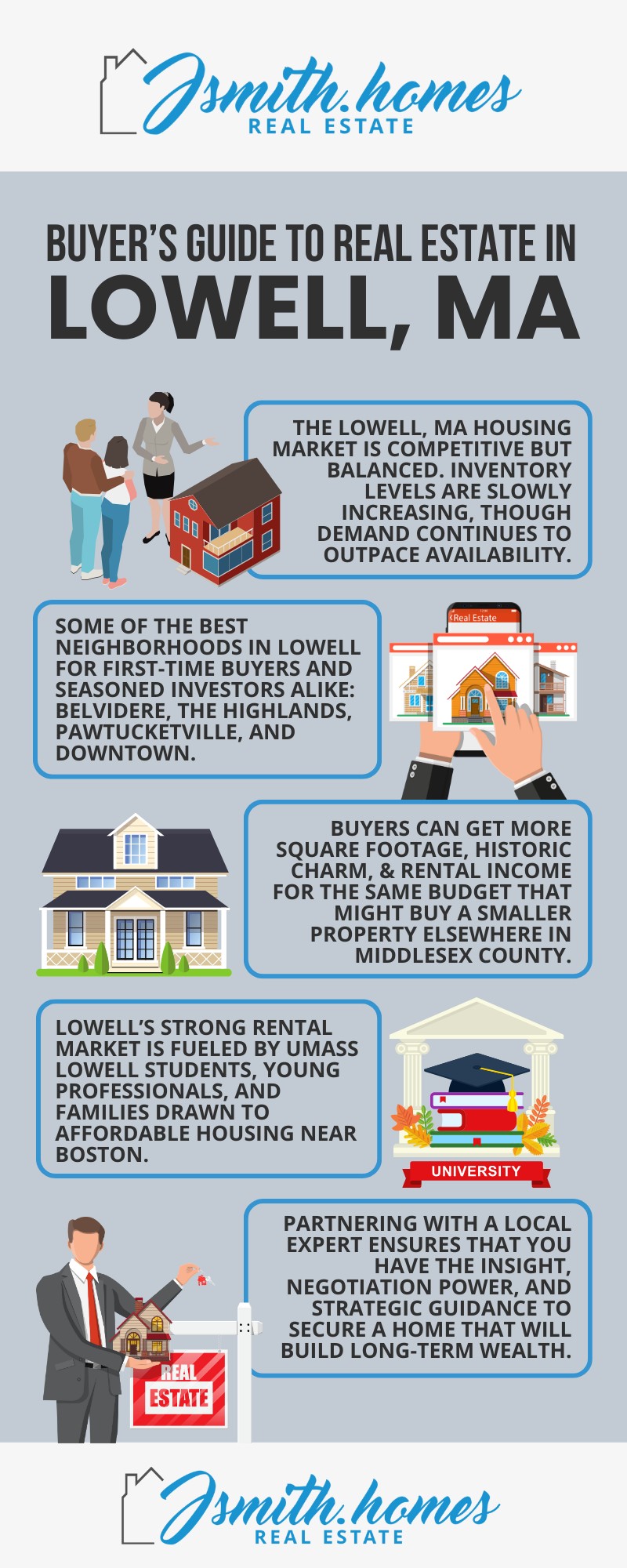
As we enter 2026, the Lowell, MA housing market remains competitive but balanced.
Inventory levels are slowly increasing after the supply crunch of previous years, giving buyers a bit more breathing room—but demand continues to outpace availability, especially for single-family homes and multi-family properties.
Buyers who are prepared with pre-approval letters and flexible closing timelines still have an edge.
Price Trends
The median home price in Lowell hovers slightly below neighboring towns like Chelmsford or Tewksbury, making it a compelling value proposition.
While prices have seen steady appreciation over the past few years, Lowell still offers buyers the chance to get more square footage, historic charm, and potential rental income for the same budget that might buy a smaller property elsewhere in Middlesex County.
2026 is shaping up to be a pivotal year for buyers. Interest rates may fluctuate, but homes in desirable areas of Lowell are expected to continue appreciating. Securing a property now can lock in equity for years to come.
Targeting the Best Neighborhoods in Lowell
Finding the right neighborhood is just as important as finding the right property. Here are a few standout areas:
Belvidere
Known for its grand Victorian homes, tree-lined streets, and a quiet, almost suburban feel, Belvidere is perfect for buyers seeking historic charm. Homes here command a premium, but they often hold their value exceptionally well.
The Highlands
This neighborhood offers a mix of single-family homes and convenient access to retail, restaurants, and community amenities. It’s ideal for families who want a suburban feel without sacrificing connectivity.
Pawtucketville
With its suburban streets, parks, and proximity to the Lowell-Dracut State Forest, Pawtucketville is attractive for buyers looking for space and nature while remaining close to the city.
Downtown
For those who crave urban living, converted mill lofts and condos downtown offer a walkable lifestyle, historic architecture, and easy access to arts and dining. This area is particularly popular with young professionals and first-time buyers who appreciate city life.
Knowing the micro-neighborhoods—like which streets are quieter or which areas have better schools—can make a huge difference in both lifestyle and long-term property value.

The Investment Power of Multi-Family Homes
The “House Hacking” Strategy
Multi-family homes—typically 2-4 units—are the crown jewel of Lowell real estate. Buying one allows you to live in one unit while renting out the others, effectively offsetting your mortgage and building equity faster.
Rental Demand
Lowell’s strong rental market is fueled by UMass Lowell students, young professionals, and families drawn to affordable housing near Boston.
For investors, this means high occupancy rates and steady rental income. Multi-family homes are a strategic choice for anyone looking to combine homeownership with smart investing.
The Commuter Advantage
Boston Connectivity
Lowell’s location along the Commuter rail to Boston makes it a practical bedroom community.
The Lowell Line connects residents to North Station in just under an hour, allowing buyers to enjoy suburban living without sacrificing downtown employment opportunities.
Highway Access
In addition to rail, Lowell benefits from excellent highway connectivity. I-495, Route 3, and the Lowell Connector provide convenient routes to Boston, the North Shore, and even southern New Hampshire, giving residents flexibility for work or leisure.

Understanding Financials and Taxes
Tax Rate Reality
Property taxes in Lowell are reasonable compared to many Greater Boston suburbs. The city uses a split tax rate, with residential properties typically taxed at a lower rate than commercial ones.
Buyers should also consider exemptions, such as the homestead exemption, which can reduce the annual tax burden on primary residences.
Budgeting for 2026
With mortgage rates likely to fluctuate, buyers should plan for interest rate adjustments and factor in local utility costs.
Jeremy advises clients to run multiple scenarios to ensure monthly housing costs remain manageable, especially if investing in a multi-family property.
Why You Need Local Expert Jeremy Smith
The Local Edge
Jeremy Smith isn’t just a realtor—he’s a Lowell specialist. From understanding flood zones near the Merrimack River to tracking emerging micro-markets, he knows the city inside and out.
Negotiation Power
In multiple-bid situations, Jeremy helps buyers craft offers that are competitive without overpaying. His guidance can be the difference between securing a dream home and missing out in a fast-moving market.
Frequently Asked Questions
Is it cheaper to buy a condo or a single-family home in Lowell right now?
Condos tend to be more affordable upfront, but single-family homes may offer better long-term appreciation and space.
How long is the typical train ride from the Lowell station to North Station in Boston?
Approximately 50-55 minutes on the Commuter rail to Boston.
Are there specific first-time homebuyer programs available for residents of Lowell?
Yes, several Massachusetts programs, including down payment assistance and tax incentives, are available for qualified buyers.
What are the current restrictions on short-term rentals in Lowell?
Short-term rentals are regulated; homeowners may need permits and must comply with city ordinances.
Do multi-family homes in Lowell require a commercial loan?
Properties up to 4 units typically qualify for conventional residential financing, but larger properties may require commercial loans.
Which elementary schools in Lowell are considered top-rated?
Schools like Bartlett and Pyne Arts Magnet are highly regarded, with strong academic performance and community involvement.
How does the homestead exemption work for property taxes in Lowell?
The exemption reduces the taxable value of your primary residence, lowering your annual property tax bill.
Key Takeaway
In 2026, buying a house in Lowell, MA, offers a unique combination of affordability, historic character, and commuter convenience.
From exploring the best neighborhoods in Lowell to leveraging multi-family homes for investment, the city presents opportunities for first-time buyers and seasoned investors alike.
Partnering with a local expert like Jeremy Smith ensures that you have the insight, negotiation power, and strategic guidance to secure a property that will build long-term wealth.
If you have any questions, feel free to contact Jeremy at 781-531-8988 or send him an email: jeremy@jsmith.homes.